Newsletter Subscribe
Enter your email address below and subscribe to our newsletter
Enter your email address below and subscribe to our newsletter

All voices matter
A Practical, Professional Guide for Investors and Beginners
The stock market is often described as the backbone of modern capitalism, yet for many people it remains abstract, intimidating, or misunderstood. Headlines focus on record highs, sudden crashes, and celebrity investors—but beneath the noise lies a structured system that quietly drives global wealth creation, retirement savings, corporate growth, and even everyday economic stability.
Understanding what the stock market is and how it works is not optional if you want to make informed financial decisions. Whether you are investing for long-term wealth, evaluating economic trends, or simply trying to understand why markets move the way they do, this guide breaks the system down clearly, accurately, and without hype.
This article explains:
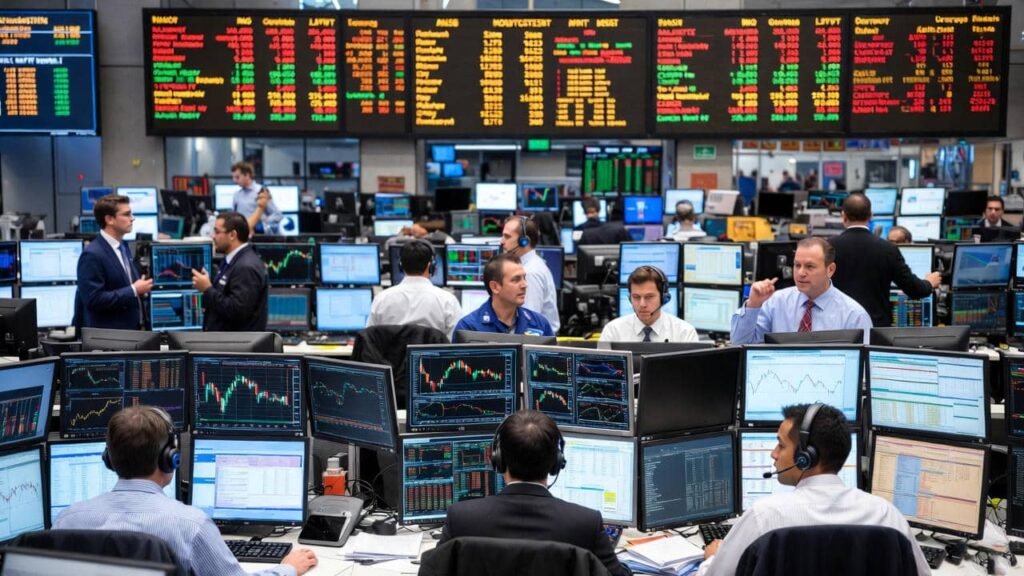
At its core, the stock market is a marketplace where ownership stakes in companies—called stocks or shares—are bought and sold.
When you own a stock, you own a fractional claim on a company’s assets and future profits. The stock market allows these ownership stakes to be:
Importantly, the stock market is not a single place. It is a network of exchanges, electronic systems, institutions, and participants operating under strict regulatory frameworks.
| Market Type | Purpose | Who Participates | Example |
|---|---|---|---|
| Primary Market | Companies raise capital | Companies & institutional investors | IPOs |
| Secondary Market | Investors trade existing shares | Retail & institutional investors | NYSE, Nasdaq |
This is where stocks are created, typically through:
Investors buy shares directly from the company, and the company receives the capital.
This is where most trading happens. Investors buy and sell shares among themselves, and the company is not directly involved in these transactions.
A stock exchange is a regulated platform that facilitates the trading of securities.
| Exchange | Country | Key Index |
|---|---|---|
| New York Stock Exchange (NYSE) | United States | Dow Jones |
| Nasdaq | United States | Nasdaq Composite |
| London Stock Exchange (LSE) | UK | FTSE 100 |
| Tokyo Stock Exchange (TSE) | Japan | Nikkei 225 |
| Shanghai Stock Exchange (SSE) | China | SSE Composite |
Exchanges enforce:
Companies sell shares to raise capital for:
In exchange, shareholders gain:
Investors trade stocks through brokerages, using different order types:
| Order Type | Description |
|---|---|
| Market Order | Executes immediately at current price |
| Limit Order | Executes only at a specified price |
| Stop Order | Triggers when price reaches a level |
Modern markets are almost entirely electronic, with transactions executed in milliseconds.
Stock prices change based on:
Price is determined by real-time supply and demand, not by a company’s opinion of its own value.
| Participant | Role |
|---|---|
| Retail Investors | Individual investors |
| Institutional Investors | Funds, pensions, insurers |
| Market Makers | Provide liquidity |
| Regulators | Ensure fairness & transparency |
Institutional investors dominate trading volume, but retail participation has grown significantly due to online platforms and zero-commission trading.
Stock prices reflect expectations about the future, not just current performance.
A profitable company can still see its stock fall if expectations were higher.
Indexes measure the performance of a group of stocks and act as market benchmarks.
| Index | Represents |
|---|---|
| S&P 500 | Large U.S. companies |
| Dow Jones | Blue-chip U.S. stocks |
| Nasdaq 100 | Technology-focused firms |
Indexes are used for:
The stock market is closely linked to real economic activity.
Despite short-term fluctuations, historically, stock markets have trended upward alongside economic growth.
No—but they are connected.
| Stock Market | Economy |
|---|---|
| Forward-looking | Reflects current conditions |
| Driven by expectations | Driven by production |
| Volatile | Slower-moving |
Markets often move before economic data changes, pricing in future outcomes.
| Myth | Reality |
|---|---|
| “You need a lot of money” | Fractional shares allow small investments |
| “It’s just gambling” | Investing is based on analysis |
| “Timing the market is easy” | Consistently timing markets is extremely difficult |
The stock market is not reserved for professionals or the wealthy. It is a transparent, regulated system that rewards patience, discipline, and informed decision-making.
Understanding how it works empowers you to:
For anyone serious about financial literacy, the stock market is not optional knowledge—it is essential.