Newsletter Subscribe
Enter your email address below and subscribe to our newsletter
Enter your email address below and subscribe to our newsletter

All voices matter
It’s about matching the strategy to your schedule, risk tolerance, and personality. In this deep dive, we’ll break down swing trading vs day trading, pulling from real market patterns and insights that have shaped my own approach. If you’re debating which path to take, stick around; by the end, you’ll have the tools to decide what’s best for you.

Day trading is all about speed and precision. You buy and sell stocks, forex, or other assets within the same trading day, never holding positions overnight. The goal? Capitalize on tiny price fluctuations that add up over multiple trades. From my experience, a typical day trader might execute anywhere from 5 to 50 trades in a session, relying heavily on technical charts, real-time news, and quick reflexes.
This style thrives on volatility, especially during market opens or around economic announcements. But it’s demanding—think of it as a full-time job where you’re glued to screens from bell to bell. I’ve seen traders use advanced platforms like Thinkorswim or TradingView with live data feeds to spot setups in minutes. If you love the adrenaline of rapid decisions, this could be your arena, but it’s not for the faint-hearted.
Swing trading, on the other hand, stretches things out. Positions are held for days or even weeks, aiming to ride the “swings” in price trends rather than intraday noise. You’re looking for bigger moves driven by momentum, support levels, or emerging patterns, often blending technical analysis with some fundamentals like earnings reports.
In practice, swing traders might only place a handful of trades per week, checking charts in the evenings or mornings without constant monitoring. Tools are simpler—a standard brokerage app like E*TRADE suffices, with indicators like moving averages or RSI guiding entries and exits. I’ve found this style lets you balance trading with a day job, but it requires discipline to weather overnight gaps or news surprises.
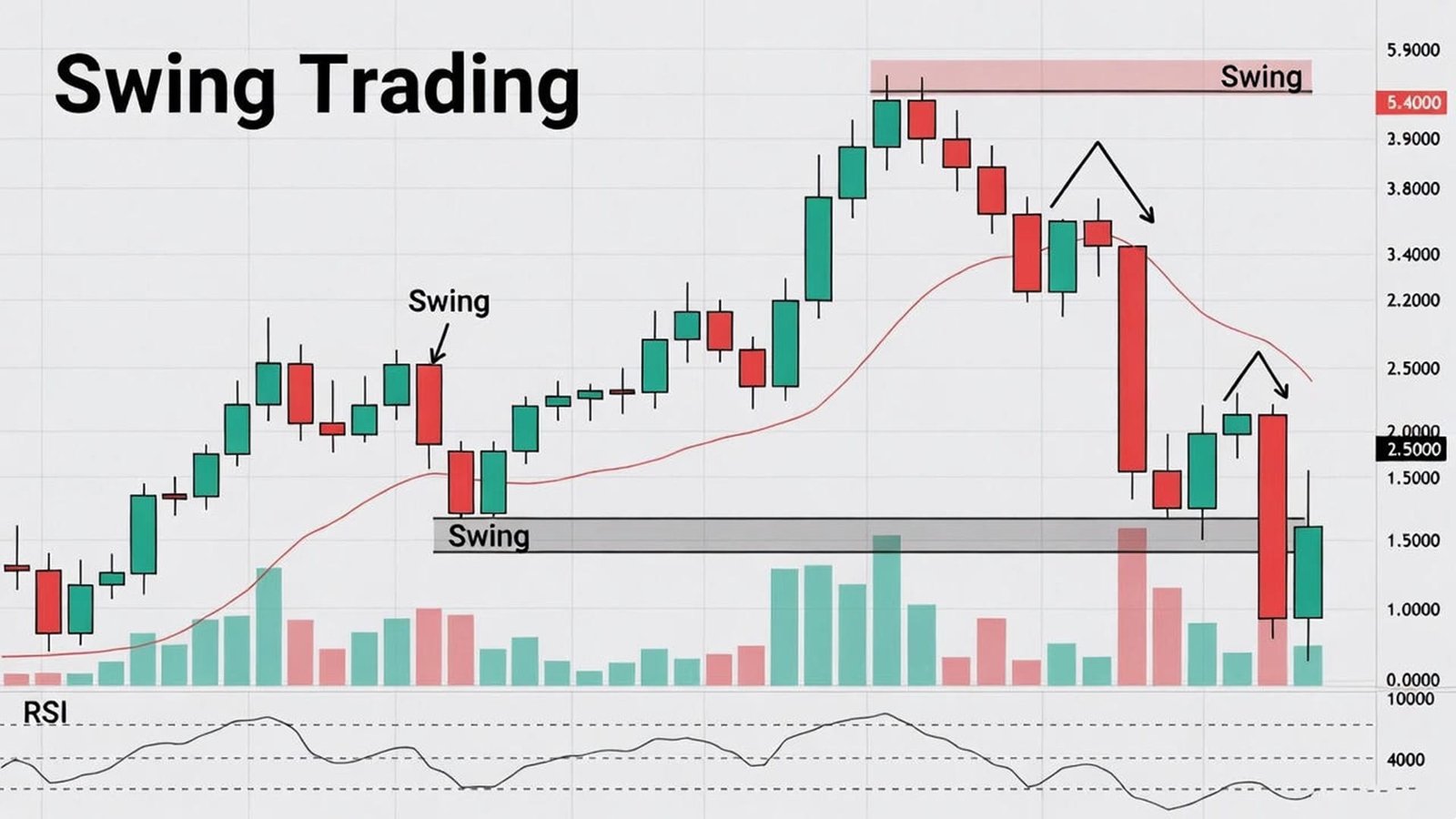
At their heart, the differences between swing trading and day trading boil down to time, frequency, and mindset. Day trading is like sprinting through a market marathon, while swing trading is more of a steady jog. To make it crystal clear, here’s a side-by-side comparison based on patterns I’ve observed and data from major trading platforms:
| Aspect | Day Trading | Swing Trading |
|---|---|---|
| Holding Period | Minutes to hours (same day only) | Days to weeks |
| Trade Frequency | Multiple trades per day | A few trades per week |
| Time Commitment | Full-time, constant screen time | Part-time, periodic checks |
| Primary Focus | Short-term volatility and news | Medium-term trends and momentum |
| Tools Required | Advanced platforms, real-time data | Standard brokerage, basic charting |
| Risk Exposure | High intraday stress, no overnight holds | Overnight gaps, longer-term shifts |
| Potential Returns | Smaller, frequent gains (or losses) | Larger but less frequent profits |
This table draws from common setups in stocks like AAPL or TSLA, where day traders chase quick 1-2% moves, and swing traders aim for 5-10% over a few sessions. Keep in mind, these aren’t hard rules—hybrids exist—but they highlight why one might suit you over the other.
Pros and Cons: Weighing the Trade-Offs in Swing Trading vs Day Trading
No trading strategy is flawless, and both swing trading and day trading have their strengths and weaknesses that can either fuel consistent profits or lead to tough lessons. Drawing from years of executing both styles, here’s an honest breakdown to help you see the real trade-offs.
To make it easier to compare at a glance, I’ve put the key pros and cons side by side in this table:
| Aspect | Day Trading Pros | Day Trading Cons | Swing Trading Pros | Swing Trading Cons |
|---|---|---|---|---|
| Risk Exposure | No overnight holds—avoid gaps from bad news or earnings | High emotional stress and potential for quick wipeouts on losing streaks | Lower daily stress; more time to think decisions through | Exposed to overnight/after-hours volatility and gaps |
| Lifestyle Fit | Endless opportunities in volatile sessions; exciting adrenaline rush | Requires full-time commitment and constant screen time (burnout common) | Flexible—fits around a 9-5 job with evening/morning checks | Requires patience; missing the full move by exiting too early |
| Costs & Efficiency | Quick compounding of small wins | High transaction costs from frequent trades; competing with algos and pros | Lower commissions due to fewer trades | Potential for larger losses if trends reverse unexpectedly |
| Profit Potential | Capitalize on intraday volatility | Small gains per trade add pressure to volume up | Bigger payouts from capturing sustained trends | Slower feedback loop can breed complacency |
| Overall Suitability | Great for full-time traders who thrive on speed | Brutal on emotions and time | Ideal for part-timers seeking balance | Demands discipline to hold through dips |
Choosing between swing trading vs day trading isn’t a coin flip—it’s about self-assessment. First, look at your schedule: If you can’t commit full days, swing trading wins hands down. I’ve coached beginners who started with swings because it allowed paper trading without quitting their jobs.
Risk tolerance matters too. Day trading suits aggressive types who thrive on quick wins, but if you prefer calculated risks with more data points, go swing. Capital is another angle—day traders need at least $25,000 in the U.S. to avoid pattern day trader rules, while swingers can start smaller.
Market conditions play a role; choppy, low-volatility days kill day trades, but swings can ride broader trends. Test both in a demo account—I’ve always recommended backtesting strategies on platforms like TradingView to see what clicks. And don’t forget taxes: Day trades often qualify as short-term gains, taxed higher than swing holds that might edge into long-term territory.
In the end, swing trading vs day trading boils down to what aligns with your goals and lifestyle. If you’re after fast-paced action and can handle the intensity, day trading might deliver the thrills and potential quick returns. But for most folks I’ve mentored—especially those balancing life outside the markets—swing trading offers a sustainable path with room for growth and fewer headaches.
Whichever you pick, start small, educate yourself relentlessly, and use stop-losses to protect your capital. Trading isn’t a get-rich-quick scheme; it’s a skill honed over time. If you’re still on the fence, try swinging a few positions while dipping into day trades on volatile days. The market’s always evolving, and in 2026, with AI tools and extended hours, the edge goes to adaptable traders. What’s your take—which style are you leaning toward?