Newsletter Subscribe
Enter your email address below and subscribe to our newsletter
Enter your email address below and subscribe to our newsletter

All voices matter
The debate between actively managed and passive funds has intensified as markets evolve, with trillions shifting based on performance, fees, and investor preferences. In 2025 alone, passive funds pulled ahead in assets, surpassing $19 trillion in the U.S. while active dipped below $16 trillion, per Morningstar data. If you’re researching “actively managed vs passive funds” to optimize your portfolio, this breakdown draws from the latest SPIVA reports, Morningstar analyses, and real-world trends to help you decide. We’ll cover mechanics, pros/cons, recent performance, and practical steps forward.
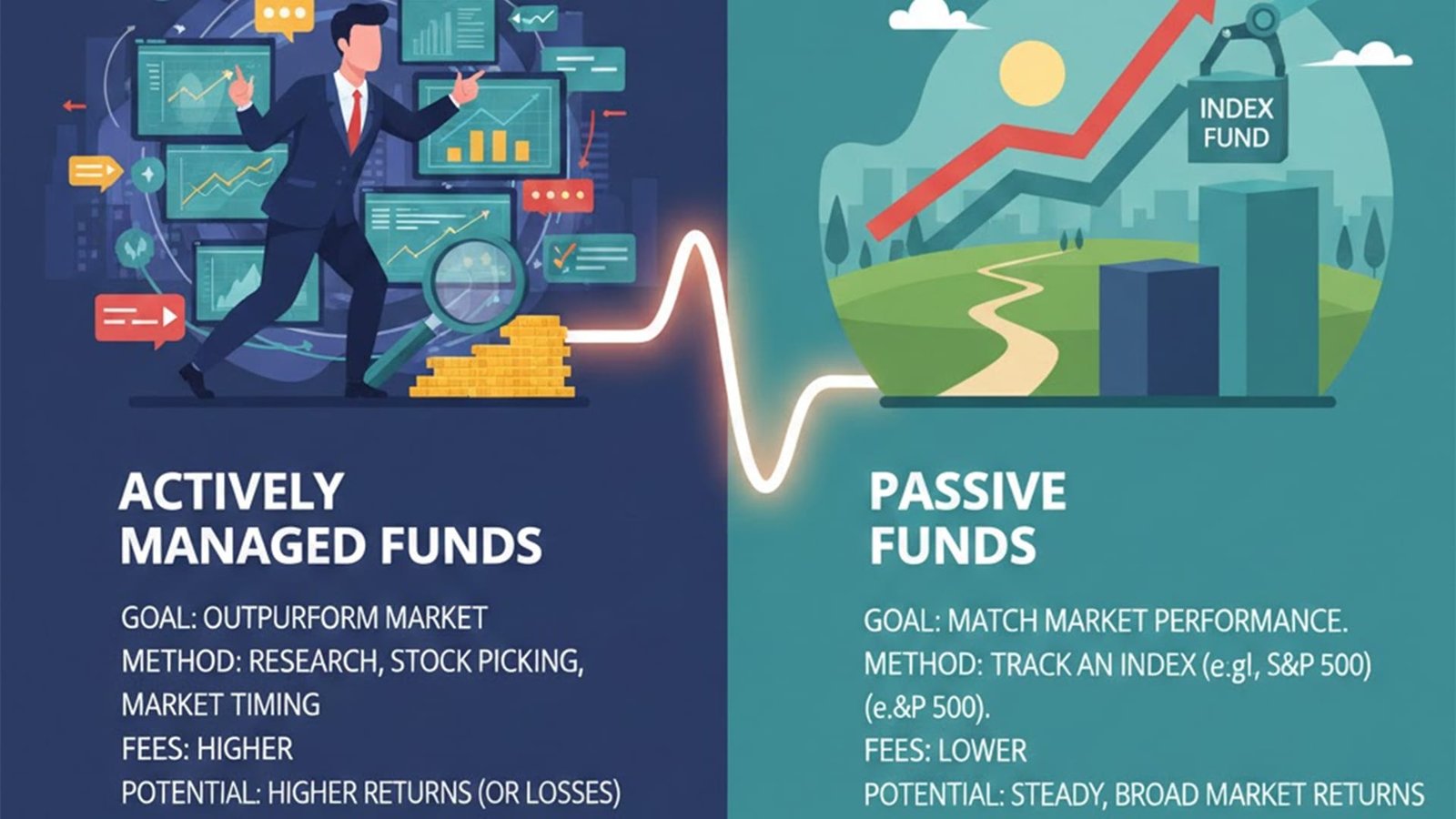
Actively managed funds employ portfolio managers and research teams to select securities, aiming to outperform a benchmark like the S&P 500. Managers analyze economic data, company fundamentals, and market trends to buy undervalued assets or sell overpriced ones. This hands-on approach allows flexibility—dodging downturns, capitalizing on opportunities, or tilting toward sectors like AI or renewables.
In practice, top active funds from firms like American Funds or Fidelity have delivered strong results in concentrated markets. For instance, in 2025, several large active funds benefited from timely bets on tech giants, posting gains that edged out benchmarks in select periods.
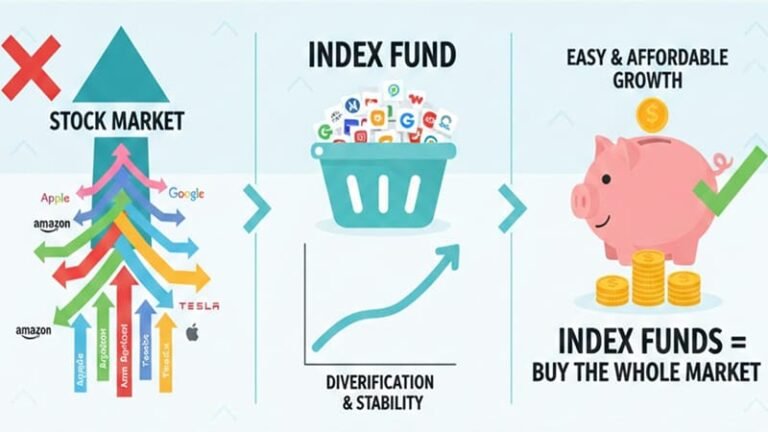
Passive funds, often index trackers or ETFs, simply replicate a benchmark’s holdings and weightings. There’s minimal trading; the goal is to match—not beat—the market. Pioneered by Vanguard’s John Bogle, this strategy bets on broad economic growth over manager skill.
Popularity has soared because of simplicity and efficiency. Funds like Vanguard’s S&P 500 ETF (VOO) or Schwab’s broad-market trackers provide exposure to thousands of securities with little oversight needed from you.
The core distinction lies in philosophy and execution:
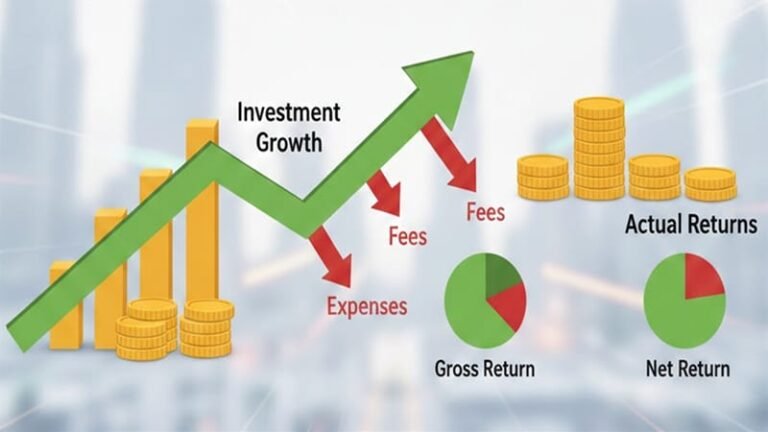
These differences compound over time—a 0.75% fee gap on a $100,000 portfolio at 7% annual growth could mean $150,000+ less after 30 years.
Active management appeals when markets are inefficient or dispersed.
Pros:
Cons:
From client reviews, active shines in down markets if the manager excels at defense, but persistence is rare.
Passive dominates for its reliability and cost savings.
Pros:
Cons:
In my experience, passive forms the core of most resilient portfolios, especially for buy-and-hold investors.
Data tells a clear story. Morningstar’s 2025 Active/Passive Barometer showed only about one-third of active funds outperforming passive peers over 12 months through mid-year, dropping further long-term. SPIVA mid-2025 reported majority underperformance across equity categories, with fixed income faring worse.
Yet cycles exist: Active briefly shone in high-dispersion environments, but over 10-20 years, 80-90% of active funds trail. Passive assets grew rapidly as investors prioritized efficiency amid 2025’s volatility.
Here’s a snapshot based on averages from Morningstar, SPIVA, and industry reports as of late 2025. Figures are approximate; check specific funds.
| Aspect | Actively Managed Funds | Passive Funds |
|---|---|---|
| Average Expense Ratio | 0.50-1.00% | 0.03-0.15% |
| Outperformance Rate (10+ Years) | ~10-20% succeed vs. benchmark | Match benchmark (minus tiny fees) |
| Tax Efficiency | Lower (more trading) | Higher (buy-and-hold) |
| Assets Under Management (U.S., Oct 2025) | ~$16.2 trillion | ~$19.1 trillion |
| Best For | Niche markets, potential alpha seekers | Long-term, cost-conscious investors |
| Risk of Underperformance | High (manager-dependent) | Low (market-dependent) |
| 2025 Success Rate (vs. Passive Peers) | ~33% over 1 year | Baseline match |
This highlights passive’s edge in efficiency, though active can add value selectively.
Active isn’t dead—it’s situational. In less efficient markets (small-caps, international, bonds), skilled managers fare better. 2025 saw pockets of active success in dispersion-heavy periods or non-U.S. equities. Blending both—passive core with active satellites—often works best, capturing market growth while targeting upside.
Your choice hinges on goals, timeline, and beliefs:
Run scenarios: Tools from Vanguard or Fidelity show fee impacts. In 2026, with potential rate shifts and AI-driven volatility, passive remains a safe bet, but monitor for active opportunities in undervalued areas.
Neither is universally superior—passive wins on data for most, delivering consistent, low-cost growth. Yet skilled active management can enhance returns in the right hands. From years reviewing thousands of portfolios, the real key is discipline: Align with your risk tolerance, diversify, and stay invested. If debating this for your strategy, start with low-cost passive as a foundation, then layer active selectively. Consult a fiduciary advisor for tailored fit—markets reward patience over perfection. Your portfolio’s success often comes down to costs controlled and emotions managed.