
Newsletter Subscribe
Enter your email address below and subscribe to our newsletter
Enter your email address below and subscribe to our newsletter

All voices matter
Goldman Sachs’ latest dive into 2026 trends hit me like a jolt of high-voltage insight. Released just weeks ago amid the ongoing AI frenzy, this report isn’t your typical crystal-ball gazing—it’s a roadmap backed by hard data on shipments, penetration rates, and supply chain shifts. Drawing from their analysis and cross-checking with industry buzz from sources like Deloitte and PwC, it’s clear we’re on the cusp of structural changes that could redefine hardware, from data centers to your pocket. If you’re an investor eyeing growth stocks or just curious about how tech will reshape daily life, buckle up. I’ll break down the key trends, their real-world implications, and where the smart money might flow—helping you decide if it’s time to pivot your portfolio.
What stands out most? The interplay between AI’s insatiable hunger for compute power and the ripple effects across semiconductors, optics, and even satellites. Goldman projects AI server shipments exploding from 1.9 million racks in 2025 to over 5 million in 2026, fueled by custom chips and faster networks. But it’s not all upside—geopolitical tensions and cost pressures loom large. Let’s unpack the top 10.

Before diving deep, here’s a snapshot of Goldman Sachs’ predictions. I’ve pulled together their forecasts with supporting stats from broader industry reports to give you a clear, actionable overview.
| Trend Number | Key Trend | Goldman Sachs Projection | Broader Impact/Stats |
|---|---|---|---|
| 1 | Rise of ASIC Chips in AI Servers | 40% penetration in 2026, up to 45% in 2027 | Drives 200%+ YoY growth in high-speed optical modules; AI capex could hit $527B globally. |
| 2 | Optical Communications Boom | Upgrades to 800G/1.6T networks exploding demand | Silicon photonics maturing; market could top $1T by 2030. |
| 3 | Liquid Cooling Acceleration | Significant penetration in ASIC-heavy servers | Addresses heat from dense compute; adoption up 50%+ in data centers per IBM insights. |
| 4 | ODM Vendors’ U.S. Capacity Push | Emphasis on diversified, resilient supply chains | Geopolitical shifts favor firms like Hon Hai; U.S. fab investments surge 30%. |
| 5 | PC Market Headwinds | Stagnant growth post-Windows 11 cycle | AI PCs plateau; leaders like Lenovo hold ground via supply chain strength. |
| 6 | Smartphone Evolution: Apple’s Foldable iPhone | Shipments 11M-35M units | Premium pricing boosts margins; redefines form factors amid flat market. |
| 7 | PCB High-End Capacity Shortages | 20-30% ASP growth for advanced materials | AI-driven demand; steady despite long-term debates per PwC. |
| 8 | China’s Semiconductor Expansion | Native GPUs and advanced nodes rising | Policy-backed investments; edge AI fuels growth. |
| 9 | Intelligent Driving Upgrades | Urban NOA and Robotaxi proliferation | Chipsets/sensors boom; Horizon Robotics leads. |
| 10 | Low-Orbit Satellite Surge | Launch accelerations, beam upgrades | Starlink-like networks expand; replacement cycles start 2026. |
These aren’t isolated silos—ASICs amp up optical needs, which in turn demand better cooling, creating a feedback loop that’s already juicing stocks in these niches.
Forget GPUs hogging the spotlight; Goldman sees application-specific integrated circuits (ASICs) stealing the show in AI servers. Tailored for niche tasks like inference, they’re more power-efficient than general-purpose chips, hitting 40% market share this year. From my vantage point tracking semis, this shift echoes the early 2020s GPU rush but with a twist: higher barriers to entry favor incumbents like those in custom design.
Implications? Explosive rack shipments mean suppliers like Hon Hai (Foxconn) and Industrial Union could see revenue spikes. Investors: Watch for firms with strong IP in ASIC fabs—think upside in a market where AI spend might exceed $500B. If you’re in ETFs, tilt toward hardware enablers.

With AI chewing through data, networks are upgrading fast—from 400G to 1.6T speeds. Goldman flags this as a trillion-dollar opportunity, amplified by ASICs’ network reliance. Co-packaged optics and silicon photonics are maturing, slashing costs and boosting performance.
In practice, this means a gold rush for module makers. I’ve seen similar booms in fiber optics during the dot-com era, but this one’s sustainable—tied to real AI workloads. Bet on leaders in photonics if you’re playing the long game.

Higher compute density equals scorching servers, and air cooling won’t cut it. Goldman’s call on liquid cooling’s rise—especially for ASICs—aligns with IBM’s view of efficiency as the new battleground. Suppliers like AVC or Delta Electronics stand to gain as complexity demands premium components.
Risk here: Adoption lags if costs stay high. But for hyperscalers, it’s non-negotiable—position in cooling specialists for defensive growth.
Geopolitics is reshaping manufacturing. Goldman highlights ODMs (original design manufacturers) committing to U.S. capacity, like Foxconn’s expansions, for that “resilience premium.” Vertical integration gives them an edge in volatile times.
From experience, diversified chains weather tariffs better. Investors: Prioritize ODMs with global footprints over pure-play China firms.
The Windows 11 refresh is winding down, AI PCs are old news, and storage costs are climbing. Goldman warns of headwinds but notes resilient leaders like Lenovo thriving via supply prowess.
Tough market? Yes, but it’s when dragons shine. Hold or buy dips in top-tier PC makers.
Goldman pegs Apple’s 2026 foldable launch at 11-35 million units—modest volume, massive margins. It could reignite smartphone innovation, offsetting price sensitivity with premium features.
Echoing the original iPhone’s impact, this might spark a form-factor war. Apple ecosystem plays could rally.
Printed circuit boards are everywhere, and AI’s push for advanced CCL (copper-clad laminates) could lift ASPs 20-30%. Goldman sees steady demand despite debates.
Quantity-plus-price uplift? That’s a winner. Target high-end PCB suppliers amid AI growth.
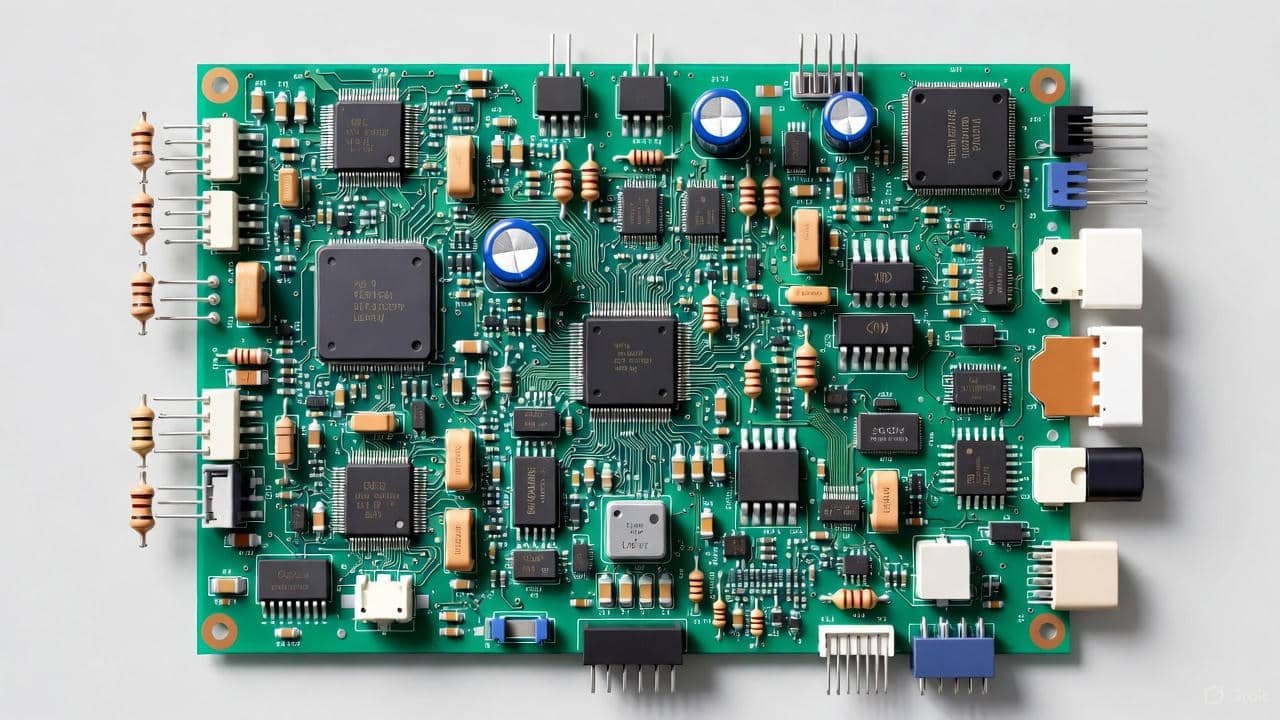
Native expansions in advanced nodes and GPUs, per Goldman, plus edge AI demand. Localization trends bolster firms like SMIC.
Geopolitical risks aside, this is breakout territory—watch for policy tailwinds.
Urban autopilot and autonomous taxis will drive chipset/sensor growth. Goldman eyes suppliers like Horizon Robotics.
Transformative for mobility; invest in ADAS enablers as commercialization accelerates.
Cheaper launches and upgrades mean faster constellations. Goldman notes 2026 replacement cycles kicking in, echoing SpaceX’s Starlink momentum.
Global connectivity boon—bet on satellite ops for emerging market exposure.

Goldman’s 2026 outlook paints a connected ecosystem where AI servers fuel optics, cooling, and more, while semis, driving, and satellites add layers. Challenges like bubbles or slowdowns exist—AI capex revisions are skyrocketing, but revenues must follow.




[…] Goldman Sachs’ Top 10 Tech Trends for 2026 […]