
Newsletter Subscribe
Enter your email address below and subscribe to our newsletter
Enter your email address below and subscribe to our newsletter

All voices matter
In the ever-shifting landscape of global finance, China’s equity markets are entering a pivotal phase. Recent analyses from leading firms like Goldman Sachs point to a “slow bull” era, where steady, fundamentals-driven gains replace the wild swings of the past. This shift aligns closely with Beijing’s upcoming 15th Five-Year Plan, set to guide economic priorities from 2026 through 2030. For investors eyeing long-term opportunities, understanding this transition isn’t just useful—it’s essential for building resilient portfolios. Drawing from fresh market reports and economic forecasts, this piece breaks down the core dynamics, offering actionable insights to help you position for what’s ahead.
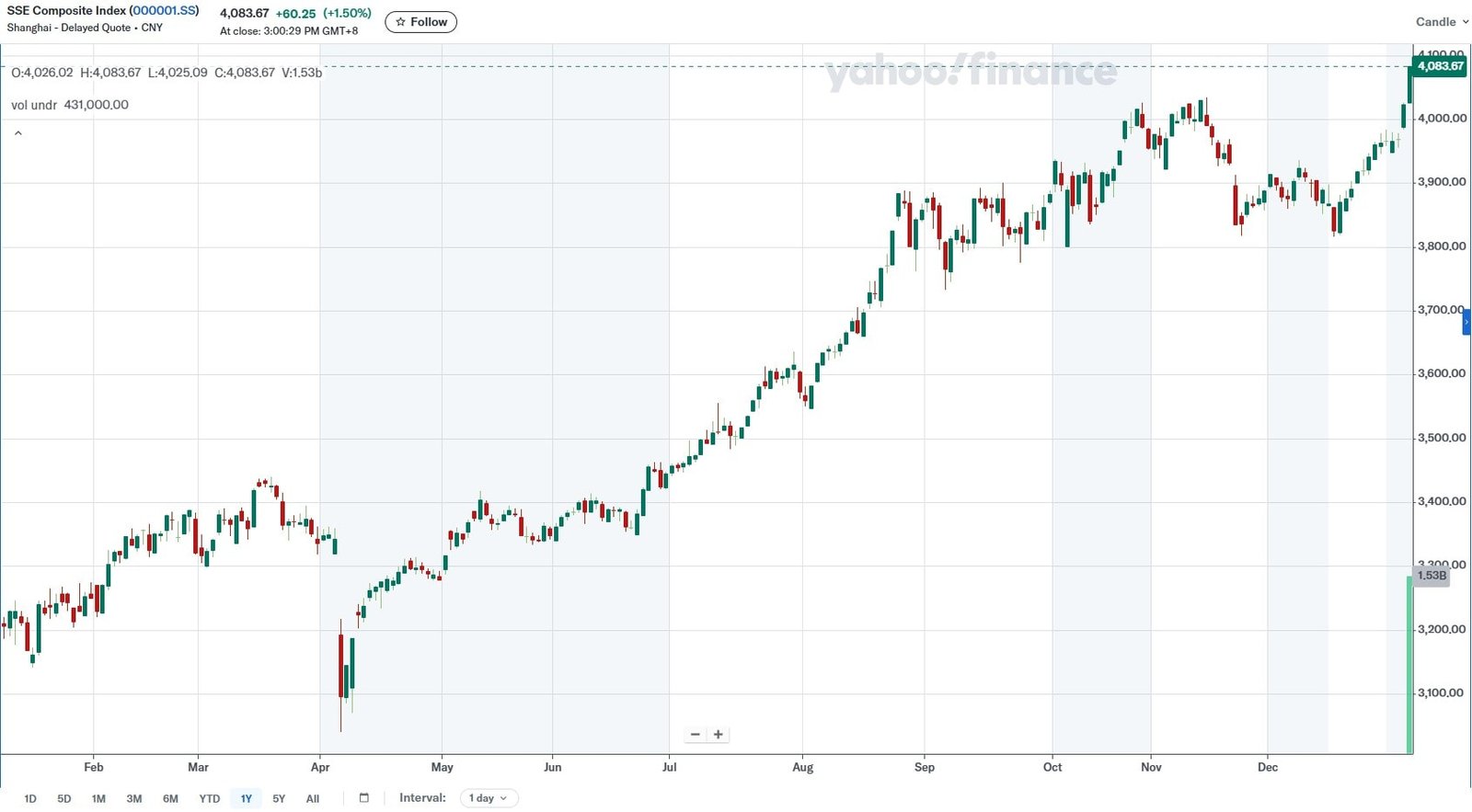
The term “slow bull” captures a market that’s maturing beyond the boom-and-bust cycles that defined Chinese stocks in recent years. Instead of relying on short-term stimulus or speculative fervor, growth is now tethered to sustainable drivers like corporate earnings and strategic national goals. Goldman Sachs, in their October 2025 strategy report titled “A Slow(er) China Bull Market,” forecasts a 30-40% upside for key indices like the MSCI China by the end of 2027. This isn’t about explosive rallies; it’s a measured climb, fueled by undervalued assets and increasing foreign inflows.
Historically, China’s markets thrived on policy-driven liquidity injections, leading to rapid rises followed by sharp corrections. But post-2022 drawdowns, the narrative has flipped. Valuations remain attractive—often at deep discounts compared to global peers—and risks from policy uncertainty have eased. As one analyst noted, this setup creates a “more durable uptrend,” where patience rewards those focused on quality over hype. For context, the CSI 300 has already shown signs of stabilization in late 2025, buoyed by renewed confidence in tech and exports.
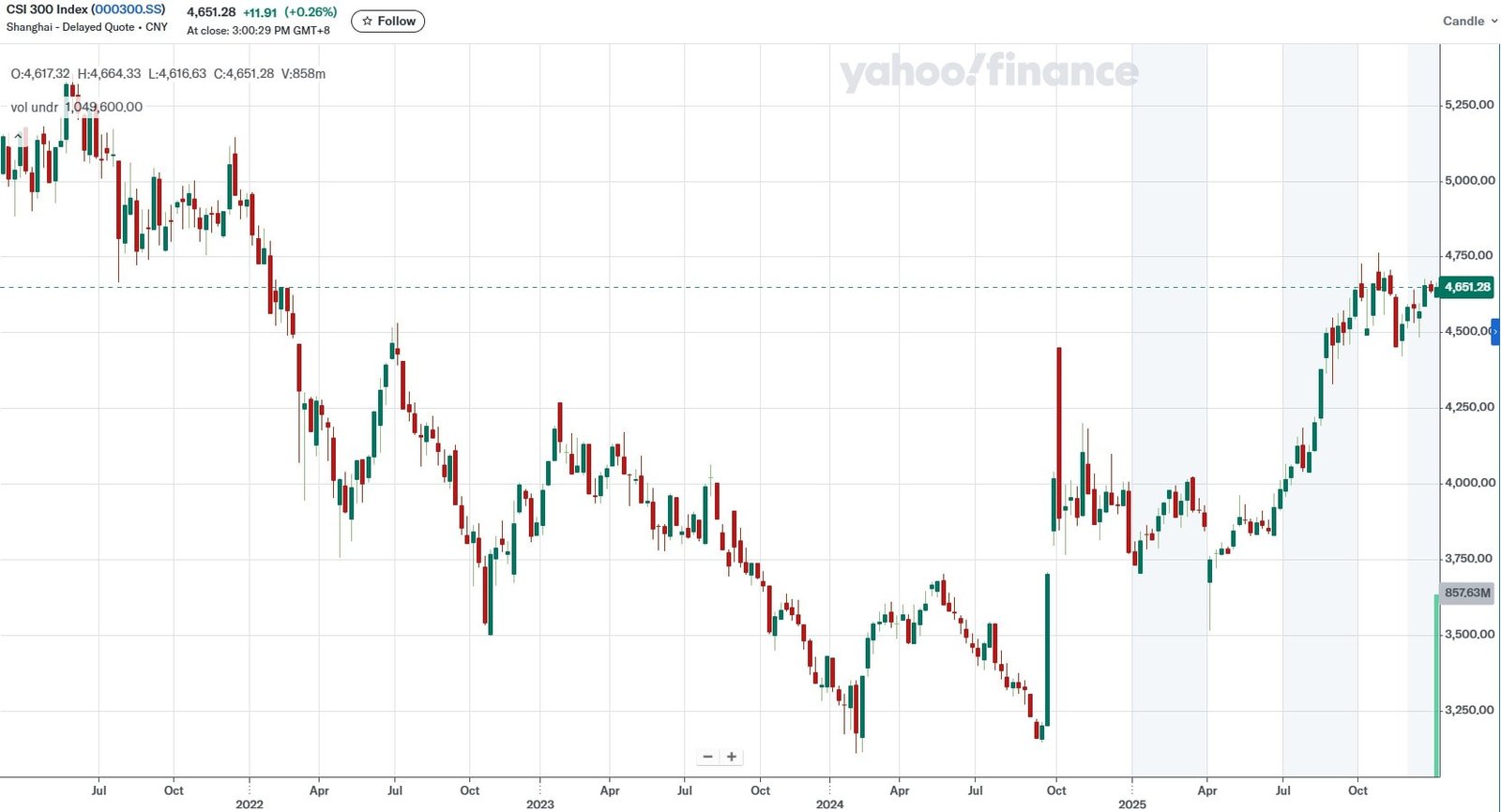
At the heart of this slow bull is a profound change in government priorities. Beijing’s approach has evolved from reactive “firefighting” measures—think emergency stimulus during downturns—to a proactive emphasis on high-quality development. The 15th Five-Year Plan, outlined in late 2025 communiques, underscores this by prioritizing technological self-reliance, national security, and consumer-driven growth.
Key themes include accelerating innovation in areas like 6G networks, biotechnology, clean energy, and artificial intelligence. This isn’t mere rhetoric; it’s backed by structural reforms aimed at rebalancing the economy away from property reliance toward advanced manufacturing and services. Goldman Sachs highlights how these policies, combined with demand-side stimulus, mitigate internal risks and support a steady growth trajectory. For instance, exports are projected to grow 5-6% annually through 2027, outpacing consensus estimates and providing a buffer against domestic weaknesses.

This long-view strategy means market opportunities are increasingly tied to national agendas. Investors should watch for sectors aligned with “modern industrial systems,” where state support could amplify returns without the volatility of past cycles.
Gone are the days when Chinese stocks surged on policy rumors or liquidity floods, only to crash when expectations fizzled. The earning logic has shifted to genuine profitability, where companies’ return on equity (ROE), revenue stability, and innovation capabilities take center stage.
Goldman Sachs emphasizes that future gains will stem from 12-14% annual profit growth in 2026-2027, rather than valuation multiples expanding wildly. This mirrors a property-buying mindset: scrutinize fundamentals like consistent ROE above 15%, high R&D spending, and strong cash flows. Sectors like AI and biotech stand out, as they reshape profit patterns amid global tech races.
In practice, this means ditching “story stocks” hyped on concepts without substance. Instead, target firms with monopoly positions in niches, such as electric vehicles or semiconductors, that can weather economic fluctuations. Recent data shows AI capital expenditures already boosting earnings in these areas, creating a virtuous cycle for select players.
China’s bull market won’t lift all boats equally. Expect a “structural bull” where gains concentrate in high-quality segments, leaving laggards behind. By 2027, indices could hit record highs, but with wide dispersion—up to 38% overall upside, per Goldman forecasts.
This divergence stems from low correlation with U.S. stocks, making Chinese assets a prime diversification tool for global portfolios. Volatility should stay muted, without systemic crashes or overnight windfalls. As the plan unfolds, focus on themes like tech innovation and consumer upgrades, which analysts predict will drive the bulk of returns.
To thrive in this environment, adopt a disciplined approach. Goldman and other experts advocate strategies that prioritize patience and selectivity over chasing momentum. Here’s a breakdown of core dos and don’ts, distilled from prevailing market wisdom:
| Strategy Category | Do This | Don’t Do This |
|---|---|---|
| Entry Timing | Buy on dips during pullbacks; build positions gradually as policies solidify. | Chase rallies or sell in fear—misses the steady compounding. |
| Stock Selection | Focus on performance metrics like high ROE, stable earnings, and alignment with tech/consumption trends. | Rely on narratives or hype without backing data. |
| Portfolio Mindset | Go global: Prioritize companies with overseas expansion to hedge domestic cycles. | Isolate domestically—overlooks reallocation flows from sovereign funds. |
These guidelines echo Goldman Sachs’ call for “alpha-centered” tactics in a slow bull. For everyday investors, this translates to holding through volatility, betting on true growth stories, and leveraging low correlations for risk management.
Beyond China, this slow bull offers broader appeal. With trillions in potential capital reallocations—from hedge funds to sovereign wealth—interest in Chinese equities is rebounding. For international players, it’s a low-correlation haven amid U.S.-China tensions or global slowdowns.
Yet, risks linger: geopolitical frictions, property drags, or slower-than-expected reforms could temper gains. Still, the 15th Plan’s export focus and tech push suggest resilience, with GDP forecasts for 2026-2027 beating consensus at 4.8-4.7%. Diversifying into these assets could yield 15-20% annual returns through 2027, per overweight recommendations.

China’s stock market is charting a new course under the five-year plan, favoring endurance over speed. By aligning with policy-driven themes and earnings realities, investors can capture meaningful upside in a maturing landscape. Whether you’re reallocating globally or honing in on domestic leaders, the key is vision and resolve. As markets evolve, staying informed on these shifts will separate the winners from the rest—position now, and let the slow bull do its work.




[…] China’s Slow Bull Stock Market […]