Newsletter Subscribe
Enter your email address below and subscribe to our newsletter
Enter your email address below and subscribe to our newsletter

All voices matter
If you’ve ever scrolled through financial forums or caught a glimpse of stock tickers flashing on TV, you’ve probably wondered: what is day trading, and could it be a path to quick gains? Day trading isn’t just buying low and selling high; it’s a high-octane strategy where you open and close positions within the same market session, aiming to pocket profits from tiny price swings. But let’s cut through the hype: it’s not for everyone, and understanding the nuts and bolts is key to deciding if it fits your risk appetite. In this guide, we’ll break it down step by step, drawing from real-world practices and regulatory insights to help you weigh the pros and cons.

At its heart, day trading means executing trades—buying and selling securities like stocks, options, or currencies—all within one trading day. You don’t hold positions overnight; everything wraps up before the closing bell to dodge after-hours surprises. This sets it apart from swing trading (holding for days or weeks) or long-term investing, where patience is the name of the game. Think of it as surfing market waves: you ride short-term volatility, often triggered by news, earnings reports, or economic data, to capture small but frequent profits.
From my experience, most day traders focus on highly liquid assets—big-cap stocks or forex pairs—because they need tight spreads and quick executions. It’s speculative by nature, more akin to a job than passive investing, requiring constant screen time and split-second decisions. Regulators like FINRA classify you as a “pattern day trader” if you make four or more day trades in five business days, provided they exceed 6% of your total trades in that window. That label comes with rules, like maintaining at least $25,000 in equity for margin accounts, which keeps casual dabblers on the sidelines.
Picture this: markets open at 9:30 a.m. ET, and you’re scanning charts for setups. Day trading works by exploiting intraday price movements—up or down—without betting on long-term trends. You might buy 1,000 shares of a tech stock at $50, sell at $50.50 an hour later for a $500 gain (minus fees), then repeat on another ticker. Tools like Level 2 quotes show order flow, helping spot imbalances where prices might spike.
Key mechanics include leverage (borrowing to amplify trades), short selling (profiting from drops by borrowing and repaying later), and rapid order types like market or limit orders. In 2026, with AI-driven platforms and zero-commission brokers, entry barriers are lower, but the game hasn’t changed: success hinges on discipline, not luck. I remember my early days staring at screens for hours, learning that emotional trades—chasing losses or greed—often lead to blowups. It’s about probability: aim for a 60% win rate on small edges, and compounding takes care of the rest.
No two traders operate the same, but proven day trading strategies provide a roadmap. Scalping involves dozens of tiny trades, grabbing pennies per share on high volume. Momentum trading rides breaking news, like an earnings beat sending a stock up 5% in minutes. Then there’s range trading, betting on stocks bouncing between support and resistance levels.
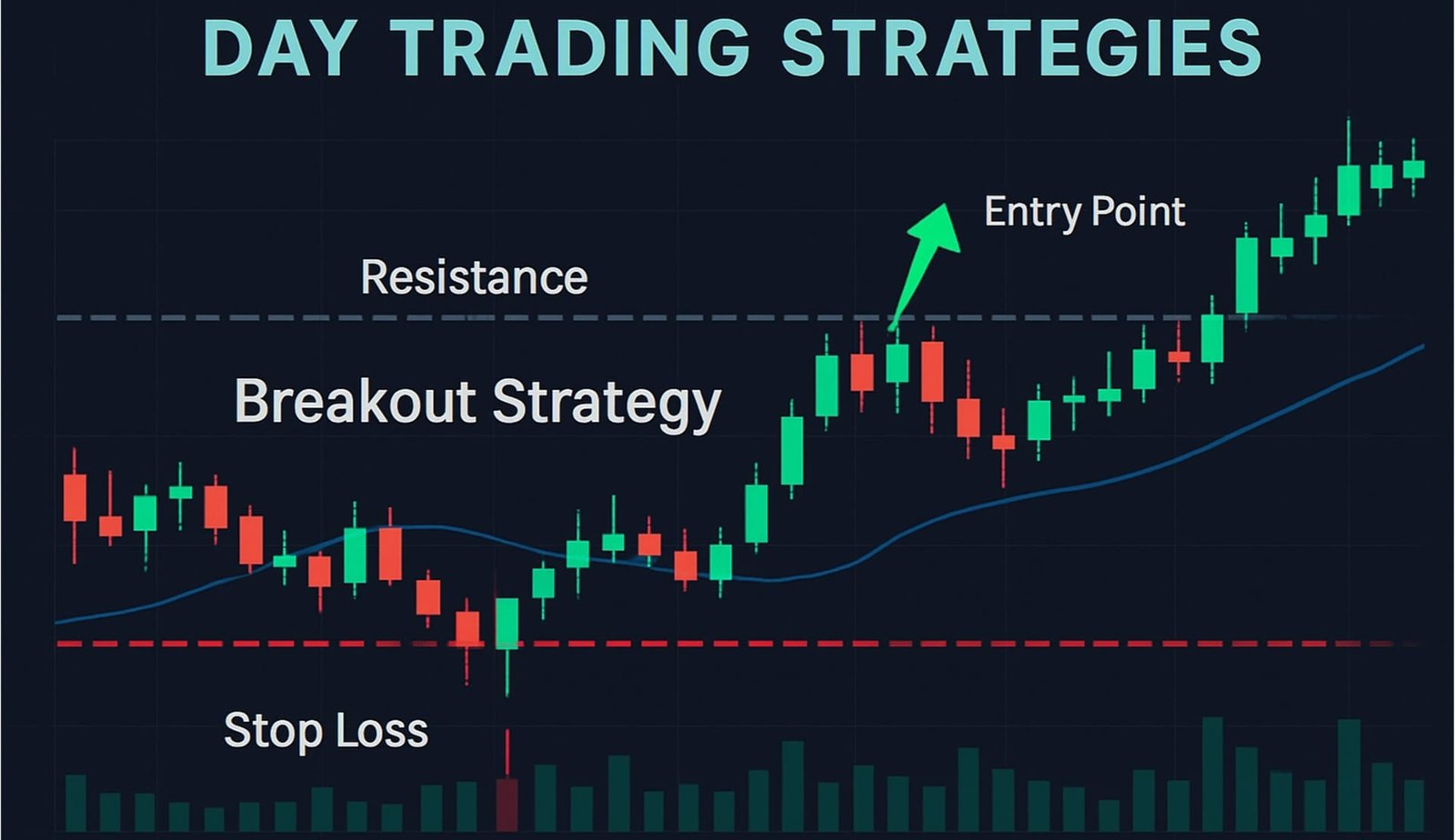
Here’s a quick comparison of popular approaches to help you pick what aligns with your style:
| Strategy | Description | Time Frame | Risk Level | Best For |
|---|---|---|---|---|
| Scalping | Quick in-and-out trades for small gains | Seconds to minutes | High | High-volume traders with fast execution |
| Momentum | Capitalizing on trending moves from news/events | Minutes to hours | Medium-High | News junkies with strong charting skills |
| Range Trading | Trading within established price boundaries | Hours | Medium | Patient analysts spotting patterns |
| Breakout | Entering on price breaks above resistance | Minutes to hours | High | Aggressive players with volatility tolerance |
| Reversal | Betting against trends at extremes | Minutes | High | Experienced contrarians with indicators |
These aren’t foolproof—I’ve burned through accounts testing reversals gone wrong—but backtesting on historical data can refine them. Always layer in technical indicators like moving averages or RSI to confirm signals.
Day trading risks are no joke; stats show most retail traders lose money, with only a slim percentage profiting consistently. Market volatility can turn a winner into a loser in seconds, and leverage magnifies losses—imagine owing more than your initial stake on a bad margin call. Psychological strain is huge: the pressure of constant decisions leads to burnout or impulsive moves.
Regulatory pitfalls abound too. Skip the $25,000 minimum, and you’re limited to three day trades per week in margin accounts. Fees, taxes on short-term gains (up to 37% federal rate), and platform glitches add up. From my vantage, the biggest risk is overconfidence—newbies often blow up chasing “easy money” without a plan. Always risk no more than 1% of your capital per trade to survive rough patches.
Ready to dip in? Start small. Open a brokerage account with robust charting (think Thinkorswim or TradingView) and practice on a demo simulator for months. Educate yourself via books like “How to Day Trade for a Living” or free SEC resources. Build a trading plan: define entry/exit rules, risk management, and daily goals.
In 2026, tech like algo bots and mobile apps make it accessible, but focus on fundamentals—study market hours, economic calendars, and sector rotations. Join communities (avoid hype-filled ones) for insights, but verify everything. My tip: Track every trade in a journal to spot patterns; it’s how I turned consistent after years of trial and error.
To decide on day trading, compare it to traditional investing. Here’s a side-by-side look:
| Aspect | Day Trading | Long-Term Investing |
|---|---|---|
| Time Horizon | Same day | Months to years |
| Goal | Short-term profits from volatility | Compound growth over time |
| Risk | High, with potential for total loss | Lower, diversified |
| Time Commitment | Full-time, screen-intensive | Passive, occasional checks |
| Capital Needed | $25K+ for pattern traders | Any amount |
| Tax Implications | Short-term capital gains rates | Long-term rates (lower) |
If you’re thrill-seeking with time to spare, day trading might appeal; otherwise, stick to index funds for steady returns.
Day trading is a demanding pursuit—profitable for the disciplined, disastrous for the unprepared. If you’re drawn to the action, start educated and cautious; treat it like a business, not a gamble. From my journey, the real win is in the skills gained: risk assessment, emotional control, and market savvy. But if stability’s your jam, long-term strategies often outperform without the stress. Weigh your goals, test the waters virtually, and remember: no trade is worth your peace of mind. Got questions on setups or brokers? Drop them below—let’s chat.