Newsletter Subscribe
Enter your email address below and subscribe to our newsletter
Enter your email address below and subscribe to our newsletter

All voices matter
The year 2026 has opened not with a diplomatic overture, but with a balance-sheet maneuver of Napoleonic proportions. When U.S. forces launched “Operation Absolute Resolve” in early January, capturing Nicolás Maduro, the world saw a regime change. But if you look past the Bradley Fighting Vehicles and the cable news chyrons, you’ll see the real driver: the United States is no longer acting as a global hegemon; it is acting as a Private Equity firm in a debt spiral.
With the U.S. national debt breaching $38.5 trillion and annual interest payments crossing the $1 trillion Rubicon, Washington has entered a “predatory” phase of fiscal policy. The playbook has shifted from “spreading democracy” to “acquiring cash-flow-positive subsidiaries.”

For decades, the U.S. could afford “loss-leader” wars like Afghanistan because its debt-to-GDP ratio allowed for strategic patience. In 2026, that patience is bankrupt.
The current Trump administration’s logic is stripped of ideological veneer. When your interest payments alone exceed your defense budget, you stop looking for “influence” and start looking for “collateral.” This explains the sudden, aggressive pivot toward Hard Assets:
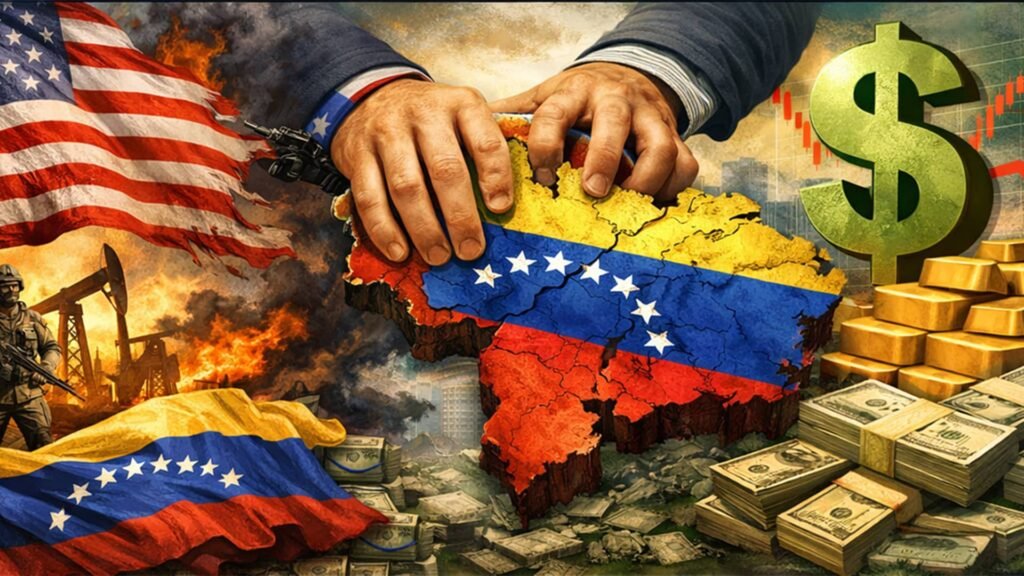
President Trump’s declaration that U.S. oil companies will “run” Venezuela to “make money for the country” is effectively a hostile takeover. However, this “merger” has a massive “poison pill” buried in the fine print: China’s Priority Claim.
Venezuela owes between $150 billion and $170 billion to external creditors. The hierarchy of this debt is the primary battlefield of 2026:
| Creditor Group | Debt Type | Estimated Amount | Legal Standing |
| China (CDB/CNPC) | Loan-for-Oil (Secured) | $10B – $12B (Principal) | Highest. Backed by physical oil contracts. |
| Wall Street (Bonds) | Unsecured Sovereign Bonds | $60B + Interest | Medium. Governed by New York Law. |
| Arbitration Claimants | Expropriation Awards | $20B+ | Variable. Legal judgments against the state. |
| Russia | Bilateral Loans | $3B – $5B | Low. Effectively frozen by U.S. sanctions. |
Under international commercial law, China isn’t just a lender; it’s a pre-paid buyer. Their “loan-for-oil” deals mean the oil in the ground is already contractually “sold” to Beijing. If Trump pumps that oil and sells it to pay down U.S. debt, he is—legally speaking—selling stolen goods.
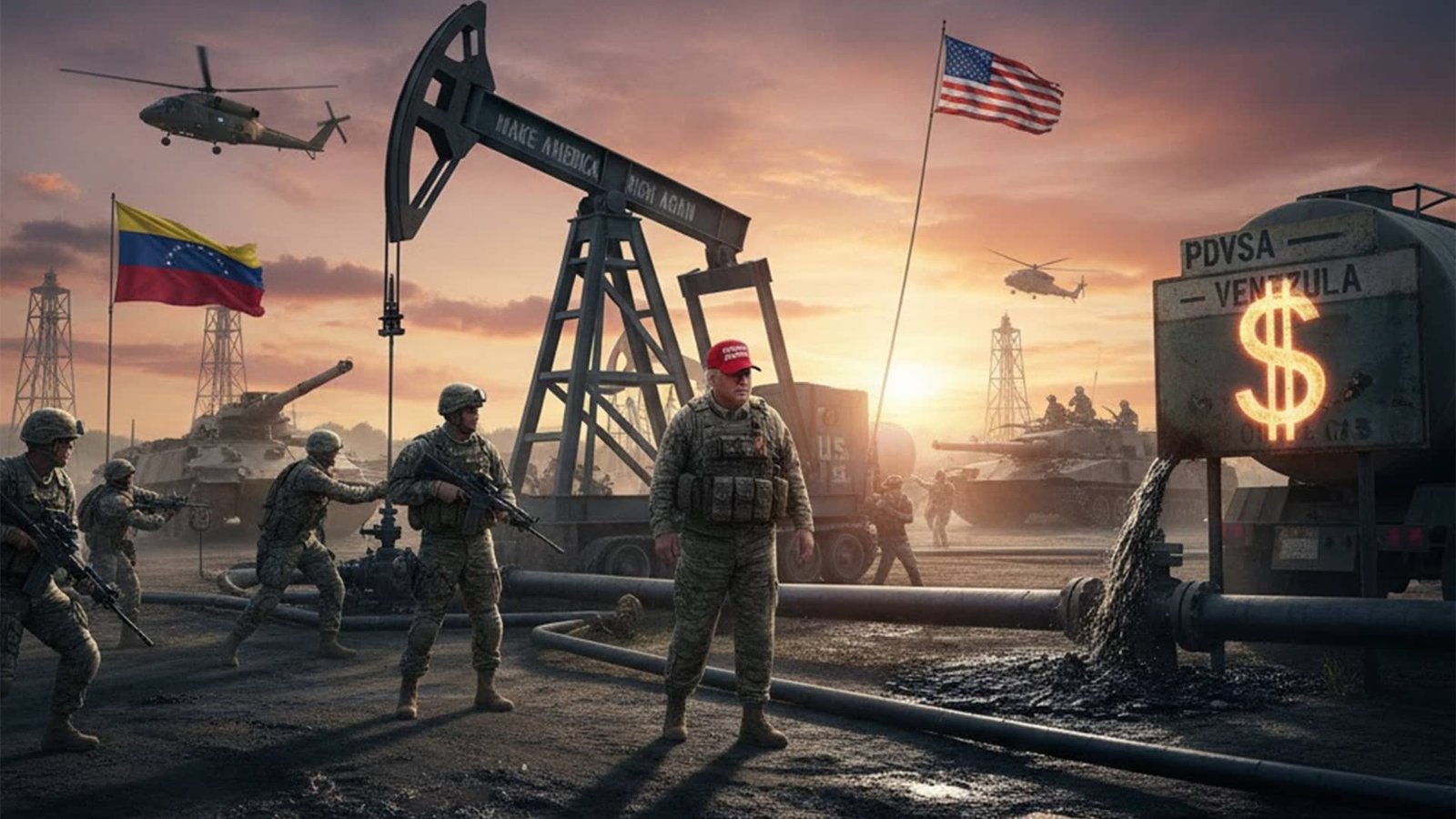
To bypass China’s seniority, the U.S. is dusting off a century-old legal mallet: the Doctrine of Odious Debt.
The argument is simple: The debt was incurred by a “despotic” regime (Maduro) without the consent of the people and was used against their interests. Therefore, the successor “stabilized” government isn’t liable.
The Catch: This is a double-edged sword.
Trump cannot simply ship the oil to Houston and call it a day without triggering a decade of litigation in international courts. He needs a “Launderer-in-Chief”—a state with high refining capacity and low legal sensitivity.
India’s refineries are perfectly tuned for Venezuela’s high-sulfur heavy crude. By selling discounted oil to New Delhi, the U.S. can turn the crude into “clean” cash. However, China has already fired a warning shot, using Japan as a proxy. By cutting off dual-use exports to Tokyo within 72 hours of the Caracas operation, Beijing signaled its “Economic Strike Radius.” Any nation helping the U.S. “liquidate” Venezuelan assets should expect a total trade freeze from the world’s second-largest economy.

The 2026 Venezuela intervention marks the end of the “Rules-Based Order” and the beginning of the “Collection-Based Order.” The U.S. is no longer the guarantor of global trade; it is a debt-strapped titan trying to avoid a margin call.
For the rest of the world, the message is clear: Contracts are now subordinate to Force. If the U.S. successfully erases China’s secured debt through administrative fiat, the foundational trust of the global financial system—the sanctity of the contract—dies.
We are moving from an era of Lex Mercatoria (Merchant Law) to an era of Lex Talionis (Law of Retaliation). In this new world, you don’t just need a lawyer to protect your investments; you need a carrier strike group.
Winter isn’t coming. It’s here, and it’s being invoiced in USD.