Newsletter Subscribe
Enter your email address below and subscribe to our newsletter
Enter your email address below and subscribe to our newsletter

All voices matter
As we kick off 2026, the buzz around Chinese equities is hard to ignore. Goldman Sachs, one of the heavyweight players in global finance, has doubled down on its recommendation to overweight Chinese stocks in portfolios, projecting annual returns of 15% to 20% through 2027. This isn’t just hype—it’s grounded in a fresh wave of economic momentum that’s reshaping China’s growth story. Drawing from their latest outlook reports and cross-referenced with market data from sources like Bloomberg and MSCI, I’ll break down what’s fueling this optimism, where the valuations stand today, and how investors can position themselves without getting caught off guard by the risks.
I’ve spent years tracking emerging markets, and China’s trajectory right now reminds me of those pivotal shifts we’ve seen in the past—like the post-2008 recovery or the early 2020s tech boom. But this time, it’s less about sheer stimulus and more about structural upgrades that could sustain gains over the medium term. Let’s dive in.

Goldman Sachs highlights a trio of “new kinetic forces” propelling China’s economy forward, moving beyond traditional low-value exports to high-tech dominance and domestic resilience. Their economists have bumped up GDP forecasts to 4.8% for 2026 and 4.7% for 2027—well above consensus estimates from the IMF and Bloomberg. This isn’t pie-in-the-sky; it’s backed by real shifts in exports, investment, and innovation.
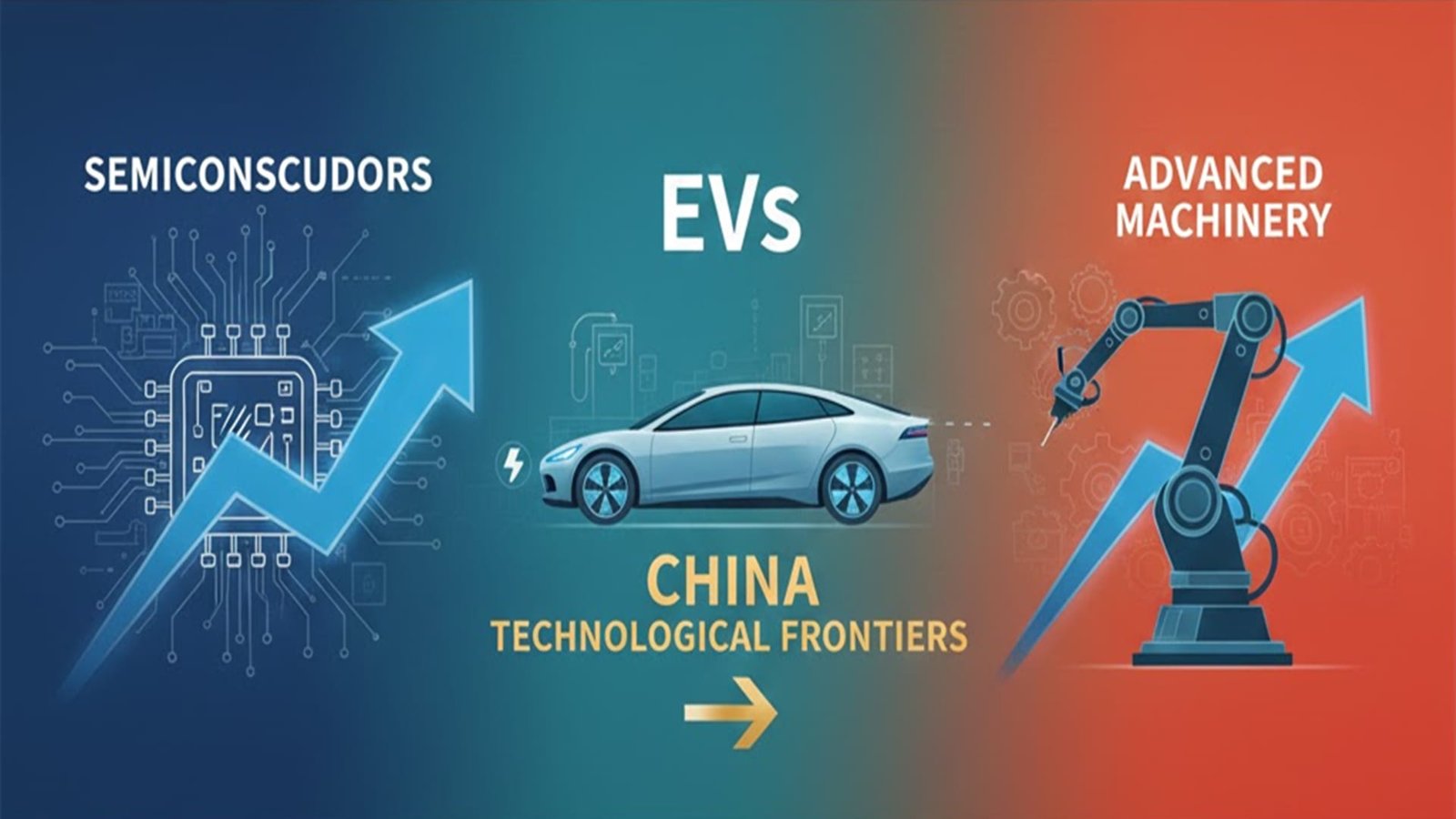
First off, exports are no longer just about cheap goods. China’s high-tech manufacturing—think semiconductors, EVs, and advanced machinery—is grabbing global market share at a clip. Real export growth is pegged at 5-6% annually, even amid U.S. tariffs that peaked over 100% last year before easing to 30% in a trade truce. Sectors like AI chips and solar panels are leading the charge, with companies in these areas already seeing over 40% revenue growth in 2025.
Then there’s the push from policy. The 15th Five-Year Plan (2026-2030) is laser-focused on upgrading industries, from AI to new energy. Government support for infrastructure and advanced manufacturing is expected to juice corporate earnings by 3% annually over the next decade, per Goldman’s calculations. Add in “anti-involution” policies—cracking down on cutthroat competition in oversupplied sectors like batteries and chemicals—and you’ve got healthier profit margins across the board.
Finally, corporate globalization is a game-changer. Chinese firms are expanding overseas, with overseas revenue projected to hit 20% of total by 2030. Think renewables, biotech, and high-end equipment—areas where growth is outpacing domestic markets. This diversification not only cushions against local slowdowns but also boosts overall economic stability.
| Key Economic Drivers for China in 2026-2027 | Description | Projected Impact on GDP/Earnings |
|---|---|---|
| High-Tech Export Upgrades | Shift to semiconductors, EVs, and machinery; 5-6% annual growth | +0.5-1% to annual GDP; 10-15% earnings lift in tech sectors |
| Policy-Driven Investments | 15th Five-Year Plan focus on AI, infrastructure, and anti-involution | 3% annual earnings contribution from AI alone |
| Corporate Globalization | Overseas revenue rising to 20% by 2030 in renewables and biotech | Enhanced resilience; 12-14% profit growth for leading firms |
These aren’t isolated trends—they’re interconnected, creating a virtuous cycle that’s making China less vulnerable to external shocks.
Fast-forward to early January 2026, and Chinese stocks look like a steal compared to their global peers. The MSCI China Index trades at a forward P/E of about 12.6x, just a tad above its long-term average but miles below U.S. benchmarks like the S&P 500’s 22x. The Shanghai Composite sits around 4,083 points, up 26% from last year, but its price-to-book ratio is hovering near historic lows—lower even than during the 2005 or 2008 bottoms.
Horizontally, China stacks up as the cheapest among major indices. The CSI 300’s P/E is in the bottom tier globally, undercutting emerging market averages and far below U.S. levels. We’re seeing record numbers of “broken net” stocks—companies trading below book value—which screams undervaluation. Factor in the yuan’s recent appreciation (breaking below 7 against the dollar and eyeing another 3% rise this year), and foreign capital is flowing back in. Goldman’s research shows every 1% yuan gain could boost stock returns by 3%.
Northbound funds (foreign inflows via Hong Kong) and southbound (mainland to Hong Kong) are both net positive, signaling warming sentiment. In my experience, these valuation discounts don’t last forever—especially when earnings growth is forecasted at 15% for MSCI China this year. If you’re hunting for value, this is prime territory.
Goldman isn’t vague about where to hunt—they’re eyeing sectors with explosive earnings potential and reasonable valuations. Top picks include AI chips, computing infrastructure, new energy, and biotech. These align with the Five-Year Plan’s priorities and are seeing “structural upside” from policy tailwinds.
Consumer staples and select services (like leisure and retail) offer defensive plays, buoyed by policies promoting holidays and consumption. Financials and real estate could rebound on yuan strength and stabilizing property markets—the drag from housing is easing as inventories clear. High-dividend stocks, especially state-owned enterprises, are gaining traction for their yields, often beating fixed deposits.
From what I’ve observed in similar cycles, the real winners are industry leaders in these areas—think dragons in AI or export-heavy renewables. Broader themes like “going global” and anti-involution are filtering through to smaller caps too, creating a broadening bull market.
Goldman advises overweighting Chinese A-shares and H-shares in Asia-Pacific portfolios, with a tilt toward A-shares for their policy sensitivity and potential for bigger upside. Skip broad indexes if you can—focus on selective picks: industry dragons, Five-Year Plan beneficiaries, AI innovators, globalizers, and anti-involution winners.
Build a diversified basket blending tech/manufacturing (for growth), consumption (for defense), and high-dividend plays (for income). Popular approaches circulating among pros include tech innovator baskets (AI, EVs, semis) and high-yield SOEs. ETFs like those tracking ex-state-owned enterprises could shine if innovation leads the charge.
Operationally, buy on dips, hold long-term, and tweak based on earnings momentum, valuations, and policy winds. Avoid short-term trades—focus on fundamentals like competitive moats and profit stability. If you’re new to this, start with 5-10% allocation in a global portfolio to test the waters.

No outlook is risk-free, and Goldman flags several. Global recession could crimp exports and risk appetite. U.S.-China tensions, though eased by the trade truce, could flare up again. Hot sectors like AI are getting pricey, risking pullbacks if flows reverse.
Domestically, policy shifts, slower growth, or deflation could dent earnings. Leverage is high in some areas, amplifying volatility. My advice: Diversify across themes, monitor valuation cushions, and stay flexible. Risk management isn’t about avoiding bets—it’s about sizing them right for your tolerance.
Goldman Sachs’ call on Chinese stocks isn’t isolated—it’s echoed by UBS, J.P. Morgan, and others seeing a “new cycle” emerge. With undervalued assets, policy firepower, and innovation at the helm, the setup for 15-20% returns feels credible. But remember, markets don’t move in straight lines. Assess your risk appetite, consult a advisor if needed, and align with your overall goals. If history’s any guide, getting in early on these shifts pays off—but only if you’re patient and picky.
For more on emerging market strategies, check back here or dive into Goldman’s full reports. What’s your take—bullish or cautious? Drop a comment below.